The Board Before the Move
Most goal setting advice starts with the move. Write the goal. Break it into steps. Set a deadline. Find an accountability partner. But before any move in chess, there is the board. The pieces, the squares, the threats, the open files. A move that looks brilliant on an empty board can be a blunder on a crowded one.
Strategic positioning is the art of arranging your pieces, your time, and your resources so that your next move has force. In chess, a knight on the rim is dim. A rook on an open file controls the game. In a home, a well-placed laundry basket changes the whole flow of a morning. In a budget, a single automatic transfer can do more than a year of willpower.

This article is for people who manage domestic and personal systems: home layout, household routines, personal finance, and time geometry. It is about why most goal setting advice ignores the board, and what happens when you start there instead.
The Empty Board Fallacy
Most goal setting advice is written for an empty board. It assumes you have a blank week, a blank budget, a blank house. It tells you to wake up at 5 a.m., write in a journal, meal prep on Sundays, and track every dollar. But your board is not empty. It is crowded with a commute, a child’s school schedule, a leaking faucet, a credit card bill, a parent who needs care, a kitchen counter that collects mail.
The empty board fallacy is the belief that a goal can be evaluated in isolation. It cannot. A goal is a move. A move is only good or bad in relation to the position. The same goal—save $500 a month—is a brilliant move for one household and a blunder for another. The difference is not motivation. The difference is position.
What Strategic Positioning Means at Home
Strategic positioning is the arrangement of your domestic systems before you make a move. It is the placement of the laundry basket, the location of the bill-paying station, the order of the morning routine, the structure of the budget categories. It is the board, not the move.
In chess, a player who understands positioning does not ask, “What is the best move?” They ask, “What is the best square for this piece?” The move follows from the square. At home, the question is not, “What is the best goal?” It is, “What is the best position for this system?” The goal follows from the position.
Why Positioning Gets Skipped
Positioning is invisible. It is the space between moves. It is the quiet arrangement of things. Goal setting advice skips it because positioning is hard to sell. A goal is a product: a planner, a course, an app, a challenge. Positioning is a practice: a habit of looking at the board before you move.
Positioning is also slow. It does not produce a before-and-after photo in thirty days. It produces a house that runs more smoothly over a year. A budget that bends instead of breaks. A week that has room for the unexpected. These are not dramatic results. They are durable ones.
The Motivation Trap
When a goal fails, the usual advice is to try harder. Get more motivated. Find your why. But motivation is a move-level solution to a board-level problem. If your pieces are poorly placed, no amount of motivation will make the position good. You will just make desperate moves faster.
Consider a common goal: exercise three times a week. The empty board advice says: schedule it, find a workout you love, get a buddy. But if your board is crowded—if your workout clothes are in a drawer in the basement, if your only free time is 9 p.m., if the gym is a twenty-minute drive—the goal will fail. Not because you are unmotivated. Because the position is bad.
The positioning move is different. Put the workout clothes on a hook by the bed. Choose a workout that can be done in the living room. Set a time that already exists in your week. Now the goal is not a struggle. It is a move from a good square.
Positioning in Four Domestic Systems
Strategic positioning applies to every system in a home. Here are four places where the board matters more than the move.
1. Home Layout: The Geometry of Friction
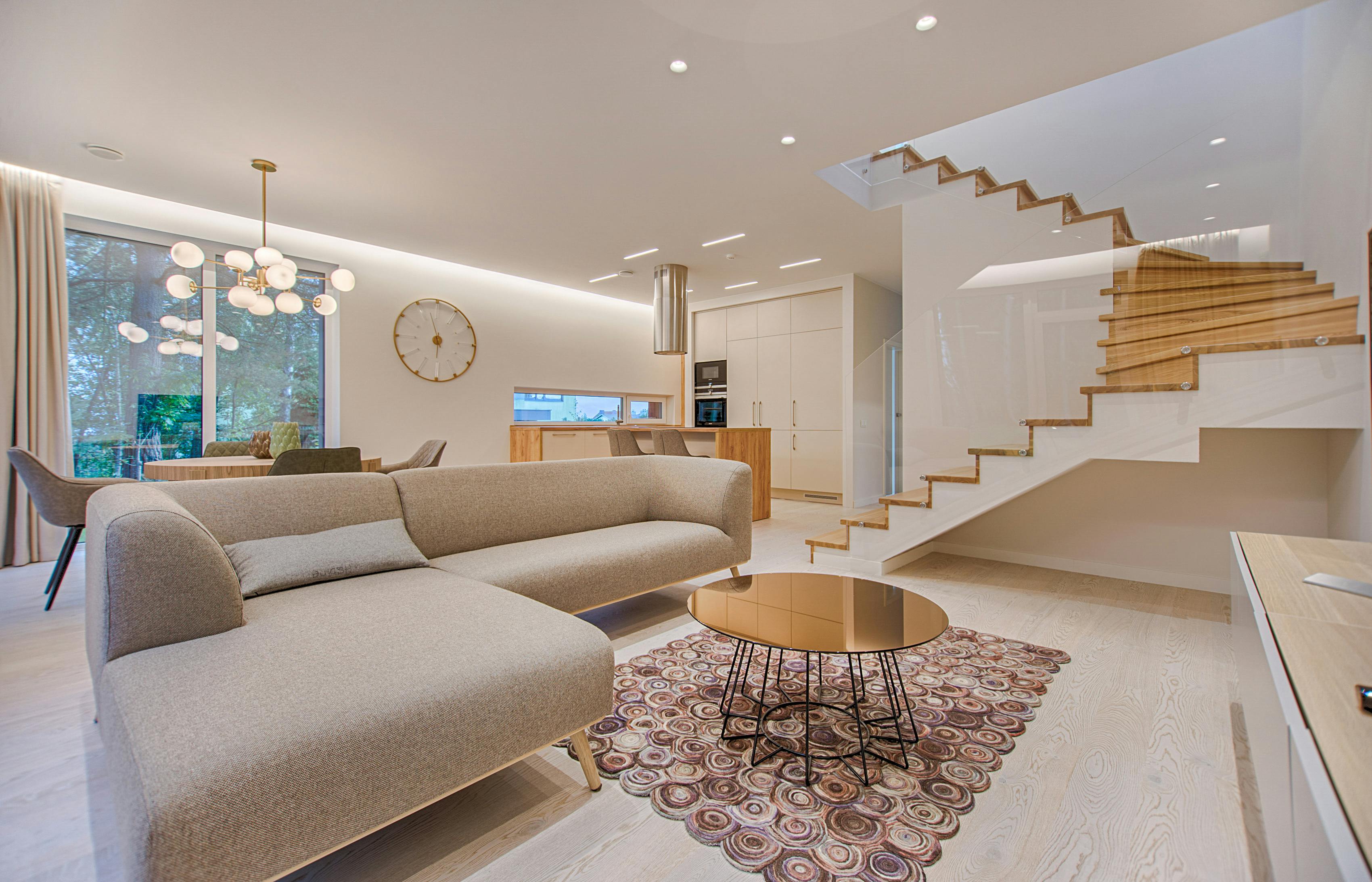
Every object in a home has a position. That position creates friction or flow. A cutting board stored next to the stove creates flow. A cutting board stored in a high cabinet across the kitchen creates friction. The goal is not to be more disciplined about putting the cutting board away. The goal is to move the cutting board to a better square.
Home layout is time geometry. The distance between where something is and where it is used is a cost you pay every day. A mail basket by the door costs less than a mail pile on the dining table. A shoe rack in the entry costs less than a shoe pile in the hallway. These are not organizing tips. They are positional moves.
2. Household Routines: The Order of Operations
A routine is a sequence of moves. The order matters. In chess, the order of moves can be the difference between a winning attack and a lost tempo. At home, the order of a morning routine can be the difference between a calm departure and a frantic one.
Most routine advice focuses on the moves: make the bed, pack the lunch, check the calendar. But the position is the order. If you pack the lunch before you make the bed, the lunch is done before the day’s interruptions begin. If you check the calendar before you check your phone, you see your own plan before you see everyone else’s demands. The moves are the same. The position is different.
3. Personal Finance: The Structure of Accounts
A budget is a board. The categories are squares. The money is the pieces. Most budgeting advice focuses on the moves: cut this expense, track that purchase, save this amount. But the position is the structure of the accounts.
If your savings account is linked to your checking account, the move to save is easy. If it is at a different bank with a three-day transfer, the move is hard. If your bills are on autopay from a dedicated account, the move to pay them is automatic. If they are scattered across three credit cards and a paper statement, the move is a monthly ordeal.
The positioning move is to set up the accounts so that the right moves are easy and the wrong moves are hard. This is not a budgeting trick. It is board design.
4. Time Geometry: The Shape of the Week
Time is a board with a fixed number of squares. A week has 168 of them. The question is not how to squeeze more moves into the squares. The question is how to arrange the pieces so that the important moves have space.
Most time management advice focuses on the moves: prioritize, delegate, say no. But the position is the shape of the week. If your deep work is scheduled for 3 p.m. on a day full of meetings, the move will fail. If your errands are scattered across five days, each one costs a separate trip. If your rest is squeezed into the leftover squares, it will not restore you.
The positioning move is to shape the week before you fill it. Block the deep work in the morning. Cluster the errands on one afternoon. Protect the rest as a square, not a leftover. Then the moves take care of themselves.
The Difference Between a Goal and a Position
A goal is a move. A position is a square. A goal says, “I will save $500 this month.” A position says, “My savings account is automatic, my bills are predictable, and my spending categories match my actual life.” The goal is the move. The position is the board that makes the move possible.
Most goal setting advice starts with the goal and works backward. Strategic positioning starts with the board and works forward. It asks: What is the current position? What are the threats? What are the open files? What is the best square for each piece? Then the goal emerges as the natural next move.
A Personal Example: The Kitchen Counter
For years, I had a goal: keep the kitchen counter clear. Every week, I would clear it. Every week, it would fill again. The goal was a move. The position was bad. The counter was the only flat surface near the door. It was the natural landing place for mail, keys, school papers, and grocery bags. No amount of clearing would fix the position.
The positioning move was to change the board. I put a small table by the door with a tray for keys and a basket for mail. I moved the school papers to a folder on a shelf. I cleared the counter not by trying harder, but by giving the objects a better square. The goal disappeared because the position changed.
How to Read Your Own Board
Before you set a goal, read the board. This is a practice, not a one-time event. It takes about ten minutes a week. Here is a simple method.
Step 1: Name the System
Choose one domestic system: the kitchen, the morning routine, the budget, the week. Do not choose all of them. One board at a time.
Step 2: Map the Position
Write down where things are. Not where they should be. Where they are. The mail, the shoes, the bills, the time blocks. Be specific. “The mail lands on the dining table” is a position. “I am disorganized” is not.
Step 3: Find the Friction
Look for the squares where pieces are poorly placed. The object that is stored far from where it is used. The account that is hard to access. The time block that is constantly interrupted. Friction is the signal that a piece is on a bad square.
Step 4: Make One Positioning Move
Move one piece to a better square. Not ten pieces. One. Put the mail basket by the door. Move the savings transfer to payday. Block one hour of deep work in the morning. Then watch what happens. The goal will often take care of itself.
The Long Game
Strategic positioning is a long game. It does not produce dramatic results in a week. It produces a board that works. A house where the morning runs smoothly. A budget that bends instead of breaks. A week that has room for the unexpected. These are not the results that make a good before-and-after photo. They are the results that make a good life.
In chess, a player who understands positioning does not panic when the position is bad. They improve it, one piece at a time. They know that a good position is not a guarantee of victory. But it is the only foundation for one.

Frequently Asked Questions
What is strategic positioning in goal setting?
Strategic positioning is the arrangement of your systems, resources, and environment before you set a goal. It is the board, not the move. In a home, it means placing objects, accounts, and time blocks so that the right actions are easy and the wrong actions are hard. Most goal setting advice skips this step and focuses only on the goal itself.
How is strategic positioning different from habit stacking?
Habit stacking is a move-level technique: you attach a new habit to an existing one. Strategic positioning is a board-level practice: you rearrange the environment so that the habit has a good square. For example, habit stacking says, “After I make coffee, I will write in my journal.” Strategic positioning says, “The journal is on the table next to the coffee maker, and the coffee maker is on a timer.” The two work together, but positioning comes first.
Can strategic positioning work for personal finance?
Yes. In personal finance, the board is the structure of your accounts and categories. A positioning move might be setting up an automatic transfer to savings on payday, moving your bills to a dedicated checking account, or simplifying your budget categories to match your actual spending. These moves make the right financial actions easy and the wrong ones hard, without relying on daily willpower.
How do I know if my position is bad?
Look for friction. If you repeatedly fail at the same goal, the position is likely bad. If an object is constantly out of place, it is on a bad square. If a time block is always interrupted, it is poorly placed. Friction is the signal. The fix is not to try harder. The fix is to move the piece to a better square.
Next on the Board
This article is the first in a series on strategic positioning for domestic systems. The next piece will look at the geometry of the kitchen: how the distance between the stove, the sink, and the refrigerator shapes every meal you cook. If you have a question about your own board, send it in. The best questions become the next article.