When Small Groups Make a Big Difference
Picture this: eight third-graders huddled around a tablet, their eyes wide as they watch a volcano simulation that helps them understand why the baking soda and vinegar erupted so dramatically in their hands-on experiment. Their teacher, guiding from just a few feet away, notices immediately when Marcus gets that “aha!” look about chemical reactions, while Sofia needs a different visual to connect the dots. This isn’t happening in a well-funded suburban school with a 1:8 student-teacher ratio. It’s happening in rural Montana, thanks to a microschooling revolution that’s quietly changing how we think about education delivery.
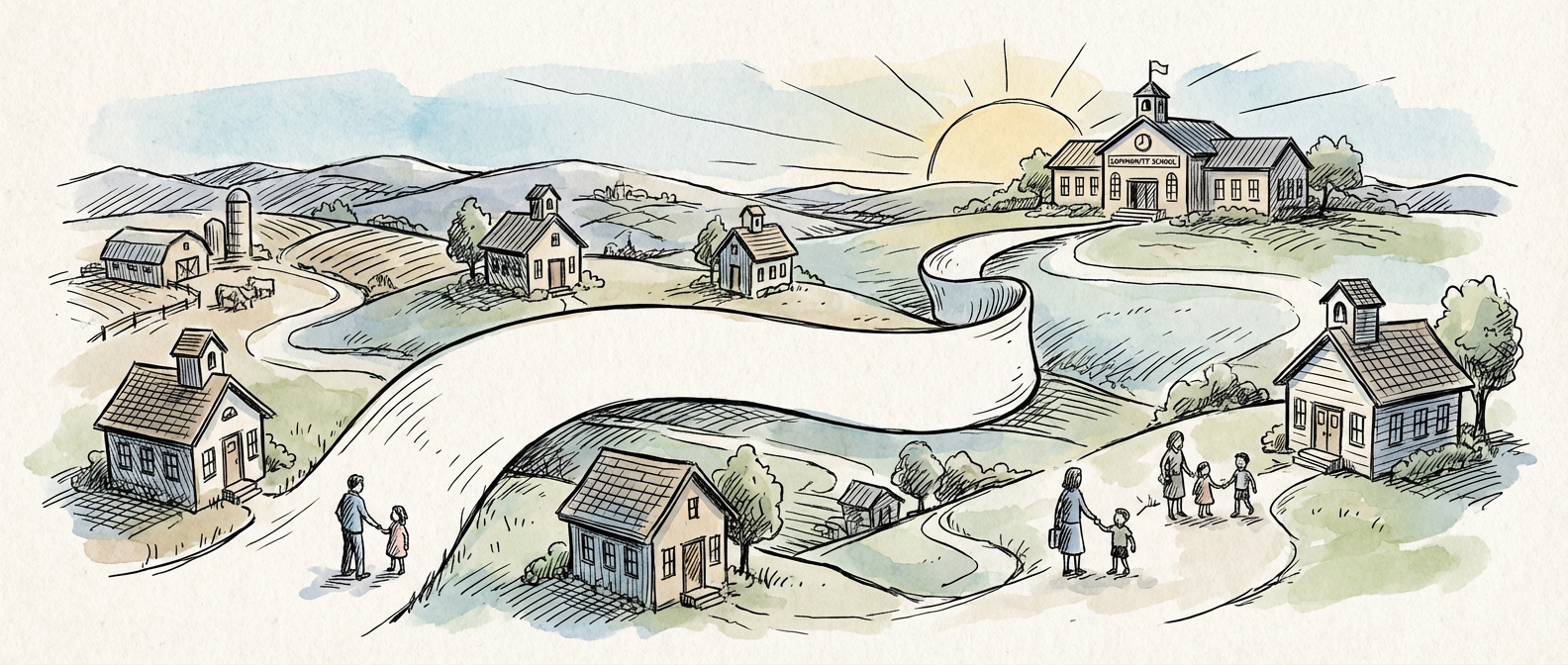
Microschooling isn’t just the latest educational buzzword. It’s a fundamental shift toward learning environments that mirror what cognitive science has been telling us for decades: children learn best in small, supportive groups where instruction can be personalized and relationships matter. When Prenda, one of the leading microschooling platforms, recently secured fifty million dollars in Series B funding and expanded to serve over thirty-four thousand students across eight hundred forty-seven communities in twenty-three states, they weren’t just scaling a business model. They were proving that the intimate learning environments we know work can actually be delivered at scale.
The numbers tell a compelling story that goes beyond mere growth metrics. Families using Prenda’s microschooling model and expansion plans report satisfaction rates of ninety-four percent compared to their previous traditional school experiences. But satisfaction scores only scratch the surface of what’s happening when we intentionally design learning around small group dynamics.

The Science Behind the Success
I’ve spent countless hours studying how children actually learn, and I find the microschooling model fascinating because it aligns so perfectly with what learning science research tells us about optimal conditions for academic growth. The magic number of eight to twelve students per group isn’t arbitrary. It’s based on decades of research showing that this size allows for meaningful peer interaction while maintaining the adult guidance necessary for deep learning.
What particularly excites me about the microschooling approach is how it addresses the social-emotional learning component that traditional classrooms often struggle to support effectively. ASU Education Innovation Lab microschooling research shows that students in these smaller settings show twenty-eight percent better social-emotional learning outcomes compared to large classroom environments. This makes perfect sense when you consider that emotional regulation, empathy, and collaborative problem-solving skills develop through practice in safe, supportive relationships.
The academic results speak volumes too. Students in these microschool settings consistently score eighteen percent higher on standardized assessments while operating at a per-pupil cost of sixty-eight hundred dollars, roughly half the national average of thirteen thousand one hundred eighty-five dollars for traditional public schools. This isn’t about finding a cheaper way to deliver the same education. It’s about finding a more effective way to deliver better education.
Rural Communities Leading the Charge
What strikes me most about this microschooling expansion is where it’s happening and why. Rural communities, often overlooked in educational innovation conversations, are becoming the testing grounds for what might be the future of American education. Sixty-seven rural districts signed partnership agreements with microschooling providers in 2025 alone, not because they’re abandoning public education, but because they’re fighting to preserve educational opportunities in their communities.
Think about the reality facing a rural superintendent watching enrollment decline year after year. Budget constraints mean larger class sizes, fewer specialized programs, and sometimes the devastating decision to close schools entirely. Microschooling partnerships offer these districts a lifeline that maintains local educational options while providing the personalized learning that small communities have always valued. It’s not about privatization or abandoning public education. It’s about expanding what public education can look like.
The partnership model emerging in these rural contexts offers valuable lessons for urban and suburban districts too. When schools collaborate with microschooling providers, they’re saying that the goal isn’t to preserve a particular delivery method but to ensure every child receives an excellent education. This shift in thinking could revolutionize how we approach educational equity across all communities.
What Traditional Schools Can Learn
The success of microschooling doesn’t mean traditional public schools should throw in the towel. Instead, it offers a treasure trove of insights that any educator can apply, regardless of setting. The key lesson isn’t about reducing class sizes to eight students, though that would be lovely. It’s about creating intentional learning communities within larger structures.
Consider how microschools structure their day around project-based learning that integrates multiple subjects naturally. When students explore local water quality issues, they’re simultaneously practicing scientific inquiry, mathematical analysis, writing skills, and civic engagement. Traditional classrooms can adopt this same integrated approach, even within existing schedules and curriculum requirements. The magic happens when we stop treating subjects as isolated silos and start designing learning experiences that mirror how knowledge actually works in the real world.
The relationship-centered approach of microschooling also offers practical lessons for larger schools. The most successful traditional classrooms I’ve observed share common characteristics with effective microschools: teachers know their students deeply, learning is personalized and responsive, and the classroom culture prioritizes both academic growth and social-emotional development. These elements don’t require a complete system overhaul, but they do require intentional focus on what matters most in education.
Looking Forward: The Classroom of Tomorrow
The microschooling movement is more than an alternative to traditional education. It’s a laboratory for testing what works when we design learning environments around children rather than around institutional convenience. As these models continue to grow and evolve, they’re generating valuable data about effective teaching practices, optimal learning conditions, and the kinds of educational experiences that prepare students for an uncertain future.
The success of microschooling also challenges us to think differently about educational equity. If smaller, more personalized learning environments consistently produce better outcomes at lower costs, we need to seriously consider how to make these benefits available to all students, not just those whose families can navigate alternative education options.
What gives me hope is seeing how this movement is sparking innovation rather than competition within traditional public education. The best educators I know are always looking for ways to better serve their students, and the microschooling model offers concrete strategies that can be adapted across different settings and constraints.
The quiet revolution happening in rural communities across America isn’t just about creating alternatives to traditional schools. It’s about rediscovering what education can be when we put learning first and let everything else follow. Whether you’re a parent exploring educational options, an educator seeking fresh approaches, or simply someone who cares about the future of learning, this movement deserves your attention and thoughtful consideration.