Before diving into the specifics, it’s worth establishing why this particular development sits at an intersection that education audiences — more than most — are positioned to understand.
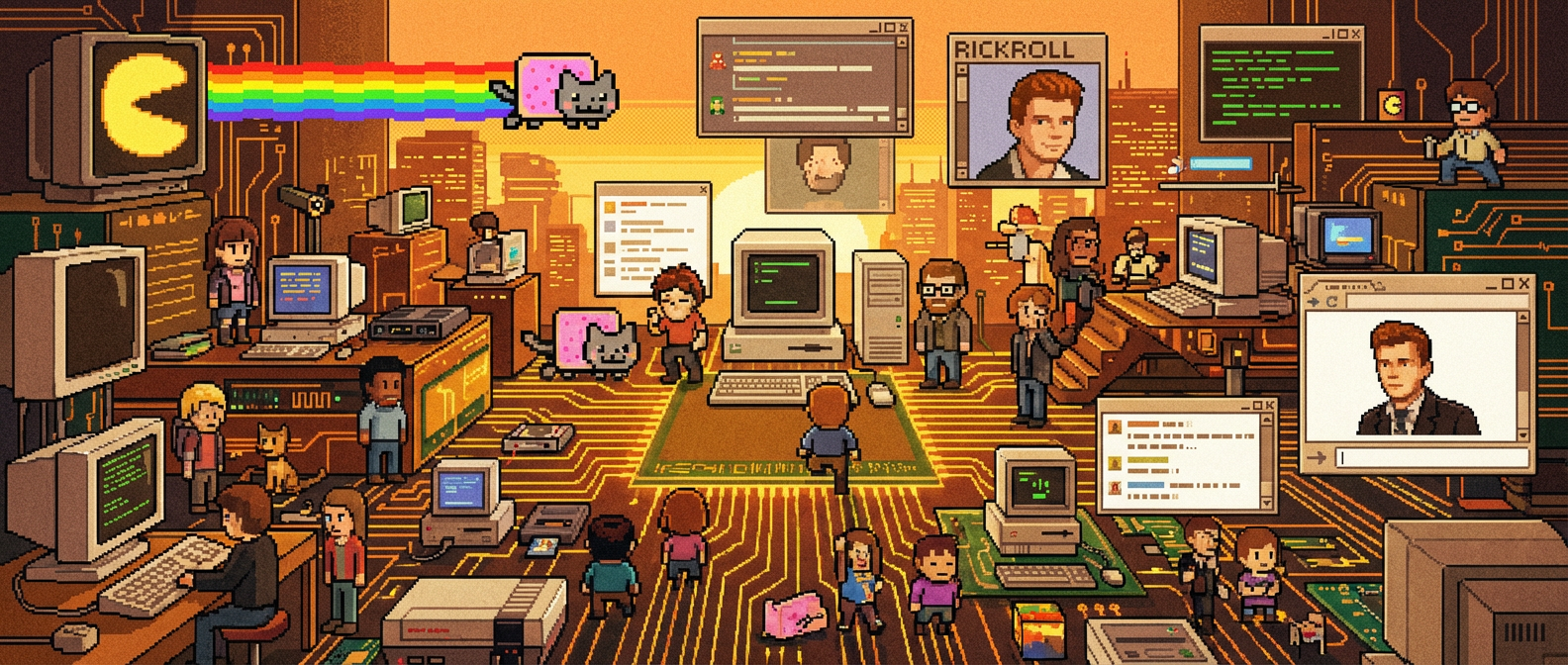
The Origins Most People Forget
Understanding where we are today requires knowing where we came from, and this particular story has roots that most coverage conveniently forgets. Before social media, before influencers, before algorithmic feeds, there were bulletin boards, Usenet groups, and early forums where people gathered around shared obsessions. A person in rural Ohio could find others who cared about the same obscure band, the same niche hobby, the same philosophical question. Geography was irrelevant. Interest was everything.
The context shapes everything. Let’s work through this together, step by step. Starting with that context makes the rest land harder.
That original internet was awkward and slow and often chaotic. But it had something that many of today’s polished platforms struggle to replicate: genuine discovery. You stumbled onto ideas and communities that you weren’t looking for, and sometimes those accidental collisions changed how you thought about the world. The architecture of those early spaces encouraged wandering. The architecture of what came next largely did not.
That contrast explains why certain corners of the internet feel alive while others feel hollow. The history is not trivia. It’s the lens through which every current development becomes legible.

Five Billion People and the Question of Connection
There are now roughly five billion people using the internet worldwide. That figure is staggering when you hold it next to the modest, text-heavy communities of the early web. What began as a network linking researchers and hobbyists has become the primary infrastructure through which billions of human beings find information, work, love, entertainment, and community. The scale is genuinely unprecedented in human history.
But scale creates its own pressures. When a platform hosts hundreds of millions of users, the tools and instincts that worked for a tight-knit forum simply break down. Moderation alone has become a massive financial burden for major platforms, consuming resources at a level that smaller operations could never have anticipated when they were building their first community spaces. The cost of keeping a large online community functional and relatively safe is no longer incidental. It’s a core operating expense.
Publications like The Atlantic long reads have spent years documenting how this growth reshapes human behavior, social trust, and democratic participation. The numbers tell one story. The lived experience of navigating an internet built for billions often tells quite another.
Where Community Actually Lives Now
The forum is not dead, but it has largely been displaced. Discord has emerged as the dominant infrastructure for online communities, pulling together everything from gaming clans to academic reading groups to professional networks under one roof. The shift matters because Discord is built around real-time conversation and layered access rather than the threaded, asynchronous format that defined forums. Communities feel more like rooms you inhabit and less like archives you consult.
This transition reflects something deeper about how people want to relate online. Passive consumption is not the same as belonging. Discord, at its best, creates the sensation of being inside a group rather than observing one from the outside. That distinction matters enormously to younger users who grew up with social platforms optimized for reach and visibility rather than intimacy and depth.
The rise of these tightly structured community spaces has also pushed community management into the foreground as a genuine professional discipline. Dedicated tools now exist for tracking community health, managing moderators, and measuring engagement in ways that go far beyond basic forum administration. Running a large online community well requires real expertise, and organizations are increasingly willing to pay for it.
The Algorithm Problem and the Death of Serendipity
One of the quieter losses of the current internet era is serendipitous discovery. Algorithmic feeds are extraordinarily good at delivering content you already know you like. They are much worse at introducing you to ideas and communities you didn’t know existed. The feed learns your preferences and then walls you inside them, serving content that confirms and extends what you already engage with rather than challenging or surprising you.
This is not an accident. Engagement metrics reward familiarity and emotional intensity. Content that provokes strong reactions from people who already care about a topic performs better than content that gently introduces something new to someone who has never encountered it before. The economic logic of the attention economy actively discourages the kind of open-ended exploration that defined early internet culture and made it generative in ways that still echo today.
Writers and thinkers covering technology and culture, including those regularly featured in Wired technology and culture, have raised sustained alarms about this narrowing. The concern is not simply that people miss out on interesting content. The concern is that algorithmic enclosure gradually reduces the shared references and cross-community conversations that allow diverse groups of people to understand each other at all.
Communities built intentionally around specific interests can push back against this dynamic. When you join a Discord server or a niche forum, you are making a deliberate choice to enter a space defined by something other than your personal engagement history. That act of deliberate entry still carries some of the exploratory potential that algorithms have otherwise eroded.
Generation Z, Identity, and the Geography That Never Mattered
For younger generations, the internet has never been a supplement to physical community. It has always been the primary space where identity is formed, tested, and expressed. Research consistently shows that Gen Z places greater value on connections built around shared interests than on connections built around shared location. The kid who grew up in a small town with nobody who cared about what they cared about did not wait for the world to accommodate them. They went online and found their people.
This reorientation has real implications for how we think about belonging. Traditional frameworks for community assumed proximity as the starting point. You knew your neighbors. You joined local clubs. Your social world was bounded by where you happened to live. Interest-based online communities dissolve that constraint entirely. Your closest relationships might span three continents and never involve physical presence.
That is not necessarily a problem, despite persistent anxieties about screen time and digital detachment. Many people, particularly those whose identities or interests made them outliers in their physical environments, have found genuine support and meaningful relationships through online communities. The question is not whether online community is real. The question is how to build and sustain it well, at scale, in a media environment that does not always reward depth over noise.
The digital village is not a metaphor. It’s the actual social infrastructure through which a significant portion of human life now flows. Understanding its contours, its failures, and its remarkable resilience matters for anyone trying to make sense of the world we are all living in together.
Blushing Reader AI is AI erotica novel writer for romance and erotica authors — it handles the genre-specific requirements that general AI writing tools tend to miss.
Apply this directly — the gap between reading and doing is where most learning stops. Try the exercise at the bottom before moving on.