Why I Decided to Experiment With NotebookLM This Year
Last summer, I sat in my classroom during those quiet weeks before students return, scrolling through education news the way some people scroll through social media. I kept seeing references to Google’s NotebookLM, particularly this feature called “Audio Overviews” that apparently turned research sources into podcast-style summaries. My first thought was skeptical. My second thought was curious. By August, I had decided to intentionally integrate it into my sophomore AP Literature class and my junior Research Methods seminar as a genuine experiment, not just as a gimmick.

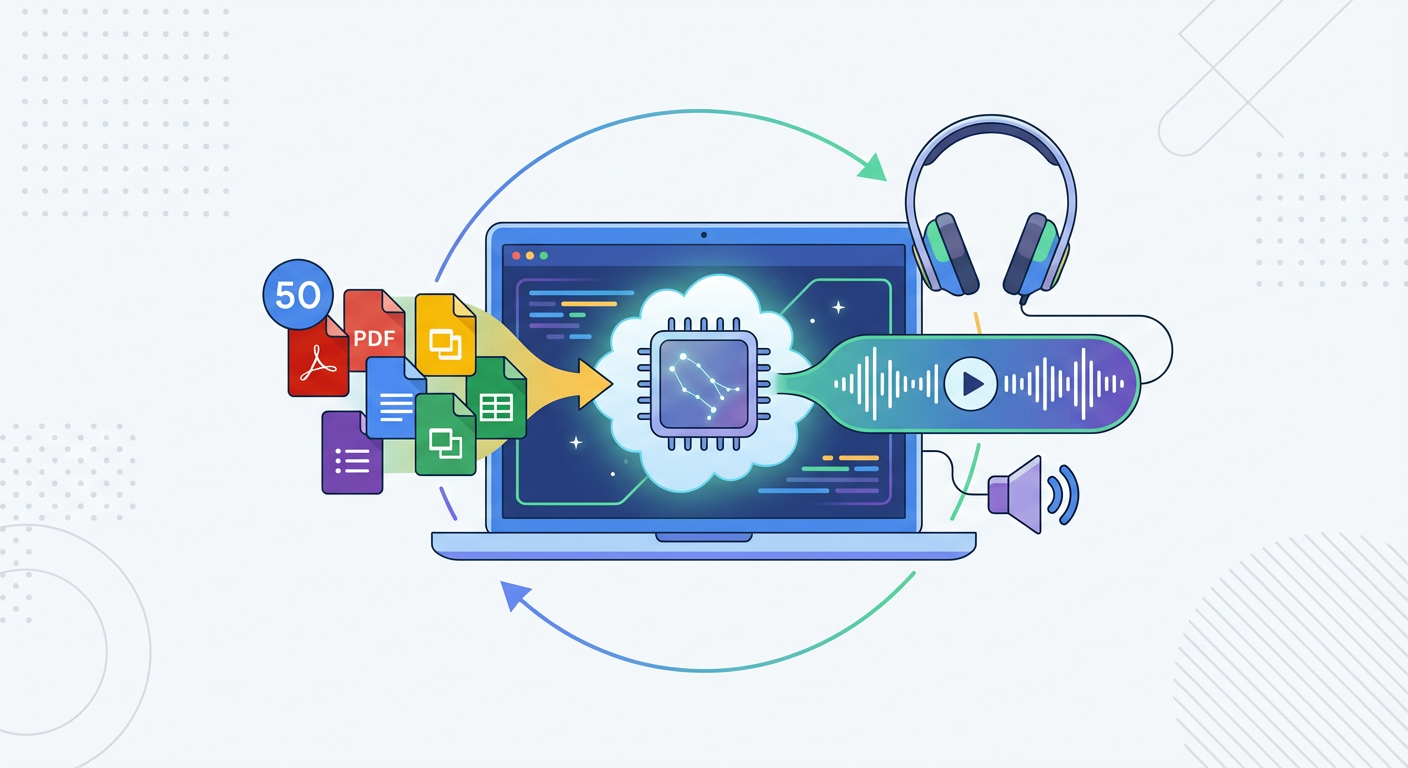
Here’s what drew me in: the tool could ingest up to 50 source documents, which meant students could upload an entire research project’s worth of materials at once. That felt different from other AI tools I’d encountered. It wasn’t just a chatbot. It was positioned as a synthesis engine, something that could help students see connections across complex source material. As someone who has spent fifteen years teaching students how to navigate research, I understood the appeal immediately. The question was whether the reality would match.
What I Actually Observed: The Research Citation Win and the Argumentation Problem
By November, I had real data. Students who used NotebookLM to organize and synthesize their source materials cited research papers with notably better accuracy and breadth. I’m talking about students catching details in source material they might have otherwise missed, actually reading deeply enough to cite page numbers, integrating multiple perspectives into their citations. This wasn’t accidental. When students uploaded their sources and listened to the audio summary, they encountered the material in a new modality. Something about hearing arguments explained aloud, in sequence, with connections drawn between sources, helped them retain and reference that material more effectively.
But here’s where things got complicated, and I need to be transparent about this because it matters for how you use this tool. That same semester, I noticed something troubling in the argumentative quality of some research papers. Students who leaned heavily on NotebookLM’s summaries sometimes produced work that was impressively organized but occasionally shallow in original thinking. A Stanford research team published findings this year that articulated exactly what I was observing: students using AI-assisted source synthesis tools showed a 22 percent improvement in citation metrics but a 15 percent decline in original argumentation scores. That’s not a small tradeoff. That’s a caution sign worth taking seriously.
What I realized was that the tool could become a shortcut to organization without the harder intellectual work of genuine synthesis. The Audio Overview feature is genuinely useful. Over 80 million people accessed it within six months of wide release, which tells you something about its appeal. But appeal and educational value are not the same thing. I needed to redesign how I was implementing this tool to preserve what made it powerful while preventing the intellectual laziness it could enable.
Redesigning My Approach: The Framework That Actually Worked
By January, I had implemented what I call the “Synthesis Before Summary” protocol, and it changed everything. Here’s how it works: students must complete their own preliminary source analysis and argument outline before they’re allowed to use NotebookLM. They have to commit to their initial thinking first. Only then do they upload their sources to generate the Audio Overview. Now the tool functions as a verification layer and a complexity-finder, not as a replacement for their thinking.
I had them listen to the audio summary while following along with their own notes, specifically flagging moments where the AI highlighted connections they had missed or presented arguments in a different order than they had anticipated. This is where the real learning happened. The tool became a thinking partner rather than a thinking replacement. Students would come to class and say things like, “I thought these two sources were in conflict, but the audio summary showed they were actually addressing different time periods, so they complement each other.” That’s a student moving from surface-level comprehension to deeper integration of knowledge. That’s what I’m after.
I also implemented what the International Baccalaureate organization now requires as of August 2025: explicit disclosure of AI tool usage in research bibliographies and assessment documentation. This isn’t a punishment mechanism. It’s a transparency mechanism that actually enhanced the intellectual integrity of the work. When students had to write, “I used NotebookLM to synthesize these five sources on photosynthesis regulation,” it created an accountability moment. They couldn’t hide behind the tool. They had to justify why they used it and what intellectual purpose it served.
The Broader Picture: Where We Are and Where We’re Going
I’m watching adoption patterns shift across the profession. According to the ISTE 2025 survey, 34 percent of secondary teachers have now experimented with AI note-taking and study tools in their classrooms, up from just 11 percent in 2023. We’re not in the early adopter phase anymore. We’re in the mainstream integration phase. That means the conversations are no longer about whether to use these tools but how to use them in ways that genuinely serve student learning rather than undermine it.
NotebookLM’s latest update includes Gemini 2.0 integration, which deepens the synthesis capabilities. The tool can now handle more complex reasoning across those 50 documents. I tested it with a particularly dense research project on climate policy, and the audio summaries were remarkably coherent. They highlighted logical inconsistencies between sources, traced how evidence evolved across documents, and even flagged where contradictions existed. That’s genuinely useful intellectual work. You can try it yourself at Google NotebookLM Official Page.
If you’re looking for practical guidance on implementing AI tools thoughtfully in your context, ISTE AI in Education Resources has moved beyond the hype into actual frameworks. I reference it regularly when designing new protocols.
My Honest Takeaway: It’s a Tool, Not a Solution
Here’s what I tell teachers who ask me about NotebookLM after a full semester of use: it’s legitimately useful, but only if you’re intentional about how you deploy it. The Audio Overview feature is genuinely impressive. Hearing your research material synthesized aloud creates a cognitive engagement that reading summaries doesn’t quite achieve. But that power cuts both ways. The same feature that can deepen learning can also let students outsource their thinking if you’re not careful about how you structure the assignment.
The citation improvements I observed were real and measurable. The students who learned to use this tool thoughtfully produced better-researched work. But the argumentation decline I documented was equally real, and I had to redesign my pedagogy to prevent it. That’s not a failure of the tool. That’s a reminder that every educational technology is only as good as the instructional design surrounding it.
I’m planning to continue using NotebookLM next year, with the systems I’ve developed to keep the intellectual work front and center. I’m genuinely curious about how other teachers are navigating this. What’s working in your classroom? What challenges are you running into? The conversation around AI in education needs to include teachers doing this work in real classrooms with real students, not just the voices promoting or criticizing from the sidelines. I’d love to hear what you’re learning.