When the Market Moves Faster Than the Classroom
Let me walk you through something I noticed while reviewing my students’ internship offers last spring. Nearly every single rejection email or acceptance letter mentioned the same phrase tucked somewhere in the job description: “proficiency with AI tools” or “experience with prompt engineering.” Not as a nice-to-have. As a requirement. Yet when I looked at our university’s course catalog, I couldn’t find a single mandatory AI literacy course across any of our degree programs.
This isn’t just my observation. According to the Coursera Global Skills Report 2025, which analyzed data from 148 million learners and 5,500 employers worldwide, AI literacy has claimed the top spot as the most in-demand skill employers are looking for. This marks the second consecutive year it’s held that position. Let that sink in for a moment. Not data analysis. Not cybersecurity. Not cloud computing. Artificial intelligence literacy.
Meanwhile, only 22 percent of four-year universities across the United States have made an AI literacy course mandatory for students. At most institutions, learning about the technology reshaping every industry is still optional. It’s treated like an elective in philosophy or art history, when it should be treated like mathematics or writing.
The Real Numbers Behind the Disconnect
The gap between what employers need and what universities are teaching has become impossible to ignore. The World Economic Forum Future of Jobs Report 2025 projects that by 2030, roughly 70 percent of jobs across all industries will require meaningful interaction with AI systems. That’s a dramatic jump from the 40 percent estimated just two years earlier in 2023. We’re not talking about gradual change anymore. We’re talking about fundamental transformation happening right now.
Job market data tells an even more urgent story. When researchers at the Burning Glass Institute analyzed 50 million job postings, they discovered that positions explicitly requesting AI literacy or prompt engineering skills grew by 312 percent year-over-year between early 2025 and early 2026. That’s not a trend. That’s an explosion.
Here’s where the human element becomes clear to me as an educator. I’ve watched talented students graduate with excellent GPAs, strong portfolios, and genuine expertise in their field, only to discover during their job search that they’re competing against candidates who know how to work with AI tools. These skills aren’t difficult to learn. They’re not gatekept by expensive certifications or years of specialized training. But they require deliberate instruction, practice, and feedback. The kind of teaching I actually know how to do. So why aren’t we doing it?
The Untapped Demand for Learning
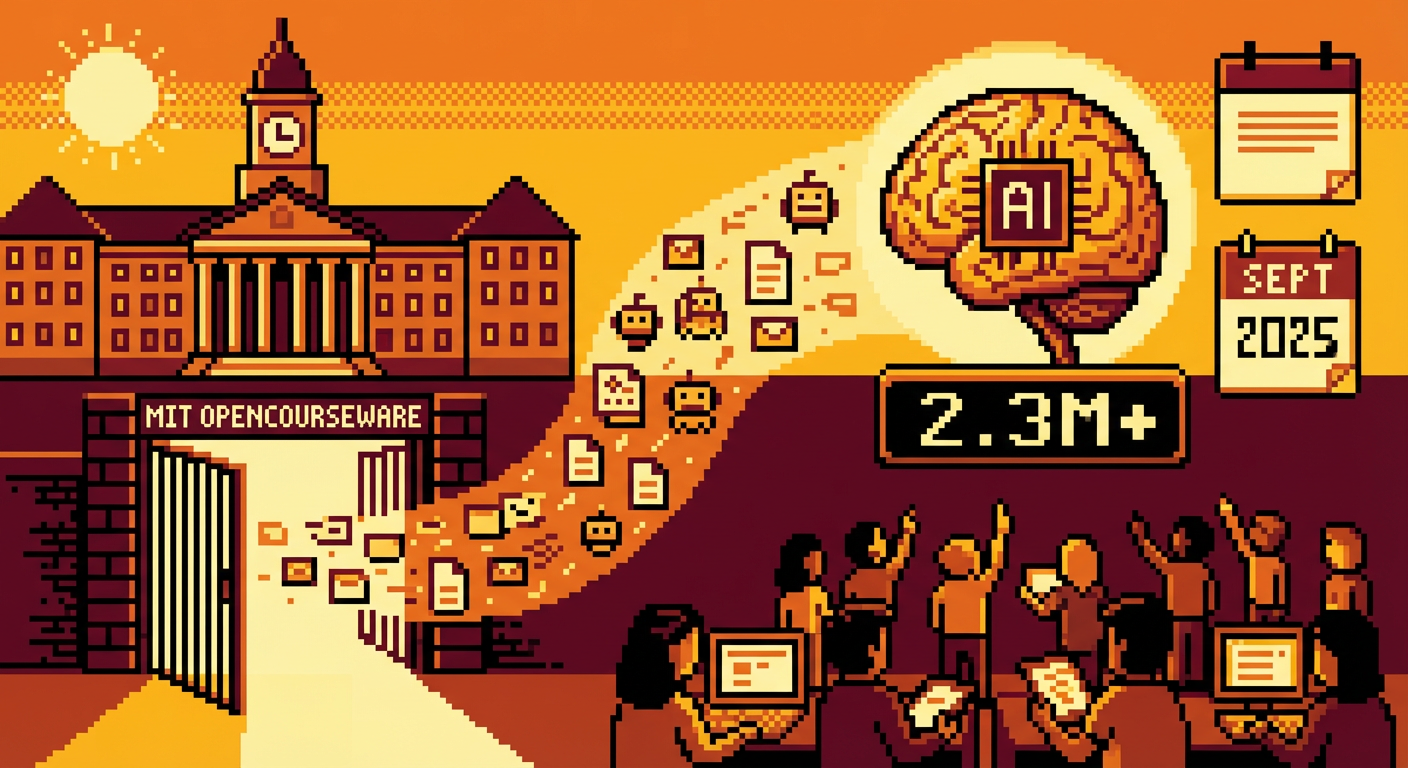
One clue emerged when MIT released a free AI literacy module through its OpenCourseWare platform in September 2025. Within four months, that single resource had been downloaded over 2.3 million times. That’s not the download pattern of something nobody needs. That’s what unmet demand looks like when someone finally creates an accessible entry point.
Those 2.3 million downloads represent students, working professionals, career-changers, and people already in the workforce who understand what universities apparently don’t yet grasp. AI literacy isn’t coming tomorrow. It’s here today. And if the institution where you’re investing time and money isn’t teaching it as a core competency, you’re being left to figure it out on your own time, outside the classroom, using your own resources.
What strikes me most is that this isn’t about universities being opposed to change. It’s about institutional inertia. Curriculum changes take time. Faculty need training. Departments need to redesign requirements. But when you’re a student sitting in a classroom in 2025 or 2026, knowing that your future employer will expect you to know something your university hasn’t bothered to teach you, time and institutional process start feeling like luxuries you can’t afford.
What This Means for Your Education Right Now
If you’re currently enrolled somewhere, I want to be honest with you about what I’d recommend. First, check your degree requirements. If an AI literacy course isn’t mandatory, ask your department chair why. Not confrontationally. Just genuinely. You might discover they’re already planning to add one. You might also discover they haven’t thought about it yet, which means your question might matter more than you realize.
Second, consider filling this gap yourself. I’m not saying this lightly, because I know you’re already busy. But the free resources are genuinely good now. MIT’s module, Coursera’s offerings, and dozens of other platforms have made foundational AI literacy accessible. Spending five to ten hours on this over the next month isn’t excessive when you consider what 312 percent job market growth means for your career prospects.
Third, if you’re choosing a university or program right now, make AI literacy part of your evaluation. Ask prospective schools directly about their AI curriculum. Are they offering it? Is it mandatory or elective? Who’s teaching it and what’s their background? These questions matter for your future in ways that might not be obvious yet.
The Bridge We’re Building Together
Here’s what gives me hope, even amid this frustration. Students like you are already waking up to this reality. The 2.3 million downloads of that MIT module, the explosive growth in job postings, the conversations happening in hallways and group chats on campus, they all point to a generation that’s not willing to wait for universities to catch up. You’re teaching yourselves. You’re seeking out resources. You’re asking smart questions about what you need to know.
Universities will change. They’re starting to. But they’ll change faster if students demand it, employers keep requiring it, and teachers like me keep talking about why it matters. In the meantime, you don’t have to wait. You can start learning now. Not because some requirement tells you to, but because understanding the tools reshaping your world is actually fascinating once someone takes the time to explain it properly. And I genuinely mean that.