Why Your Brain Craves Structure When Learning to Think
Here’s something that blew my mind when I first learned about it: our brains are terrible at developing critical thinking skills naturally. Cognitive scientists have found that instead of building logical frameworks automatically, we rely on mental shortcuts and pattern recognition that worked great for our ancestors but totally mess us up in today’s information overload. And honestly? This isn’t a bug in our design. It’s just how human cognition evolved.
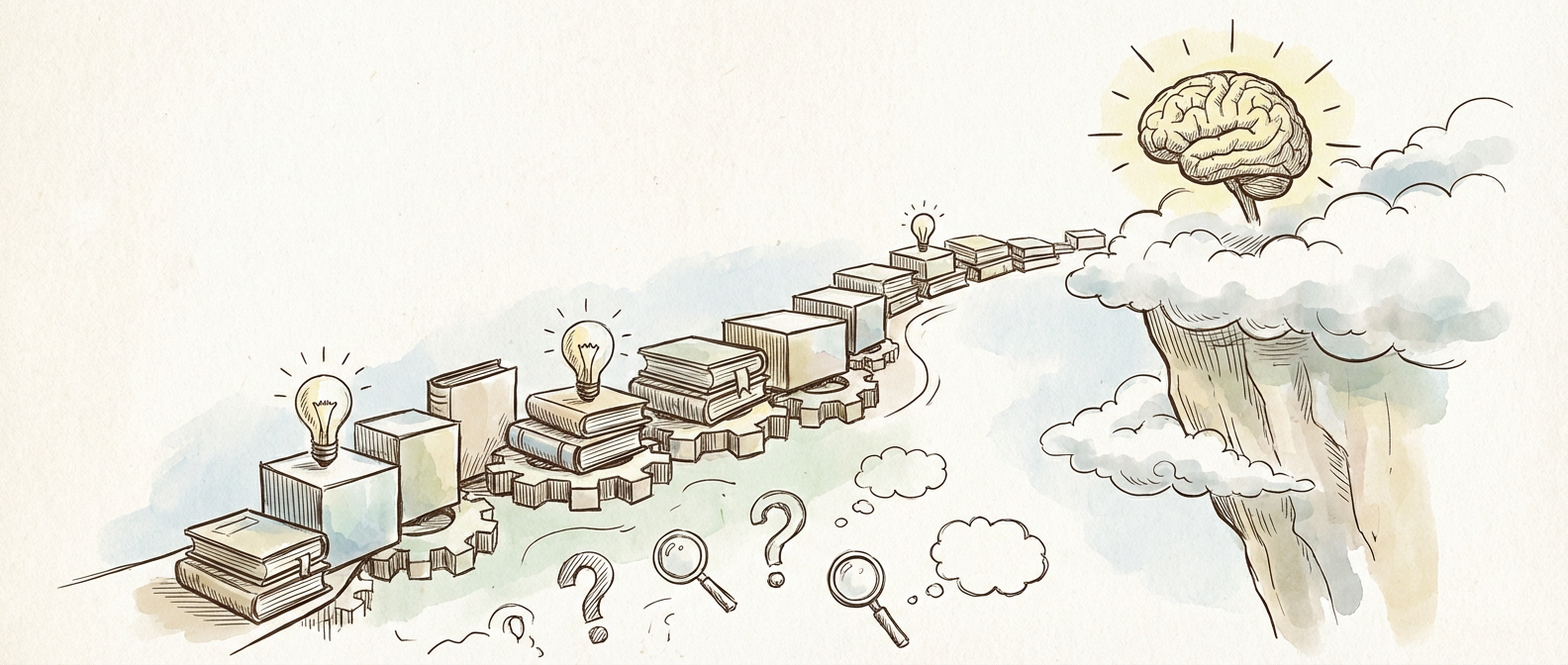
But here’s the good news. Research in cognitive load theory explains exactly why step-by-step approaches work so well for developing critical thinking. When we break down complex reasoning into bite-sized pieces, we free up what psychologists call our “working memory” to focus on one skill at a time. Think about learning to drive. You didn’t try to master steering, braking, signaling, and parallel parking all at once. You built each skill deliberately, and eventually they clicked together automatically.
Dr. Richard Paul’s research on critical thinking development shows something pretty compelling: students who learn reasoning skills individually and then practice combining them absolutely crush those who jump straight into complex analysis. The brain literally needs time to wire these new thinking patterns before it can use them smoothly. This is why that step-by-step approach isn’t just helpful, it’s actually how learning works at the neurological level.

The Foundation Layer: Teaching Your Brain to Notice
Before we can think critically about anything, we need to develop what I call “intellectual awareness.” This is your ability to notice your own thinking processes and catch yourself when you’re running on autopilot. Metacognition research shows that students who regularly practice thinking about their thinking develop stronger reasoning skills across all subjects.
Start with something simple but surprisingly powerful: the “thinking pause.” When you encounter new information, whether it’s a news article, a friend’s opinion, or even your own gut reaction to something, just pause and ask yourself: “What am I thinking right now, and why?” This isn’t about judging your thoughts. It’s about developing the habit of conscious awareness. Neuroscientist Dr. Daniel Siegel’s research shows that this kind of mindful attention actually strengthens the prefrontal cortex, the brain region responsible for executive thinking.
The next step is learning to spot your cognitive biases in real time. We all have them, and they’re not character flaws, they’re just features of human psychology. Practice catching confirmation bias by deliberately seeking out one piece of information that challenges something you believe each week. Notice when you’re using availability bias by asking yourself if the examples popping into your mind are truly representative or just the most memorable ones. These small daily practices build the neural pathways that support more sophisticated critical thinking.
Building the Framework: Question Types That Actually Work
Once you’ve developed that foundational awareness, it’s time to give your brain a reliable structure for analysis. Cognitive science research reveals that expert thinkers don’t just think harder, they think differently. They use systematic approaches that anyone can learn and practice.
The most effective framework I’ve found combines elements from Bloom’s Taxonomy with Paul and Elder’s critical thinking model. Start every analysis with clarification questions: “What exactly is being claimed here? What key terms need defining? What’s the main point versus supporting details?” These questions activate what researchers call “elaborative processing,” which leads to deeper understanding and better retention.
Then move to assumption hunting. Ask: “What beliefs or values is this argument based on? What’s being taken for granted? What would someone who disagrees assume instead?” This step is crucial because research in cognitive psychology shows that most reasoning errors come from unexamined assumptions rather than logical mistakes.
Finally, practice perspective shifting systematically. Don’t just ask “What would the other side say?” Instead, ask: “What would someone from a different culture think? What would someone from a different generation assume? What would someone with different expertise notice that I’m missing?” Studies on intellectual empathy show that this kind of deliberate perspective-taking dramatically improves reasoning quality.
The Integration Phase: Making Thinking Skills Automatic
This is where the magic happens, and it’s also where many well-intentioned critical thinking programs completely fall apart. Learning scientists have discovered that skills practiced in isolation don’t automatically transfer to new situations unless we deliberately practice that transfer. Your brain needs explicit practice connecting these thinking tools to real-world scenarios.
Choose one area of your life where you want to think more critically, maybe financial decisions, news consumption, or workplace problem-solving. Apply your question framework to one situation in this area each week, but here’s the key: start with low-stakes situations. Research on transfer of learning shows that we integrate new skills more effectively when we’re not under pressure.
Document your thinking process. Write down the questions you asked, the assumptions you identified, and the different perspectives you considered. This isn’t busywork, it’s based on research showing that externalized thinking leads to better metacognitive awareness. Plus, you’ll start to notice patterns in your reasoning that you can strengthen or adjust.
Gradually increase the complexity and stakes of the situations you analyze. The goal is to reach what researchers call “automaticity,” where good thinking habits become your default mode rather than something you have to consciously remember to do.
Beyond Individual Skills: Creating Thinking Communities
Here’s what surprised me most in the research on critical thinking development: it’s fundamentally social. The most effective critical thinkers aren’t lone wolves, they’re people who’ve learned to think well with others. Collaborative reasoning research shows that groups consistently outperform individuals on complex thinking tasks, but only when group members have developed individual skills first.
Find or create opportunities for “thinking partnerships.” This might mean joining a book club that actually discusses ideas rather than just plot points, participating in online forums where disagreement is handled respectfully, or simply having regular conversations with friends or family members who enjoy exploring different perspectives. The key is practicing your critical thinking skills in dialogue rather than just in your own head.
Share your reasoning process with others, not just your conclusions. When someone disagrees with you, get curious about their thinking framework instead of immediately defending your position. Research on argumentative theory suggests that our reasoning abilities actually evolved for social contexts, which explains why we often think more clearly when we have to explain our thinking to someone else.
Remember that building critical thinking skills is like developing any complex capability. It requires patience, practice, and the understanding that setbacks are part of the process. The goal isn’t to become a perfect thinker, but to become someone who thinks more skillfully, more aware of your own reasoning, and more capable of updating your understanding when you encounter new evidence. What’s one small thinking habit you could start practicing this week?