The Moment Everything Clicked
Sarah slumped into my classroom on a Tuesday morning in October, her backpack hitting the floor with the weight of someone who had already given up. “I’m just not a math person,” she announced before I could even say good morning. Her algebra quiz from the day before sat crumpled in her hand, marked with a disappointing 43%. I had heard these exact words hundreds of times before, but something about Sarah’s resignation made me pause. She wasn’t angry or frustrated. She was matter-of-fact, as if she had accepted a fundamental truth about herself that couldn’t be changed.
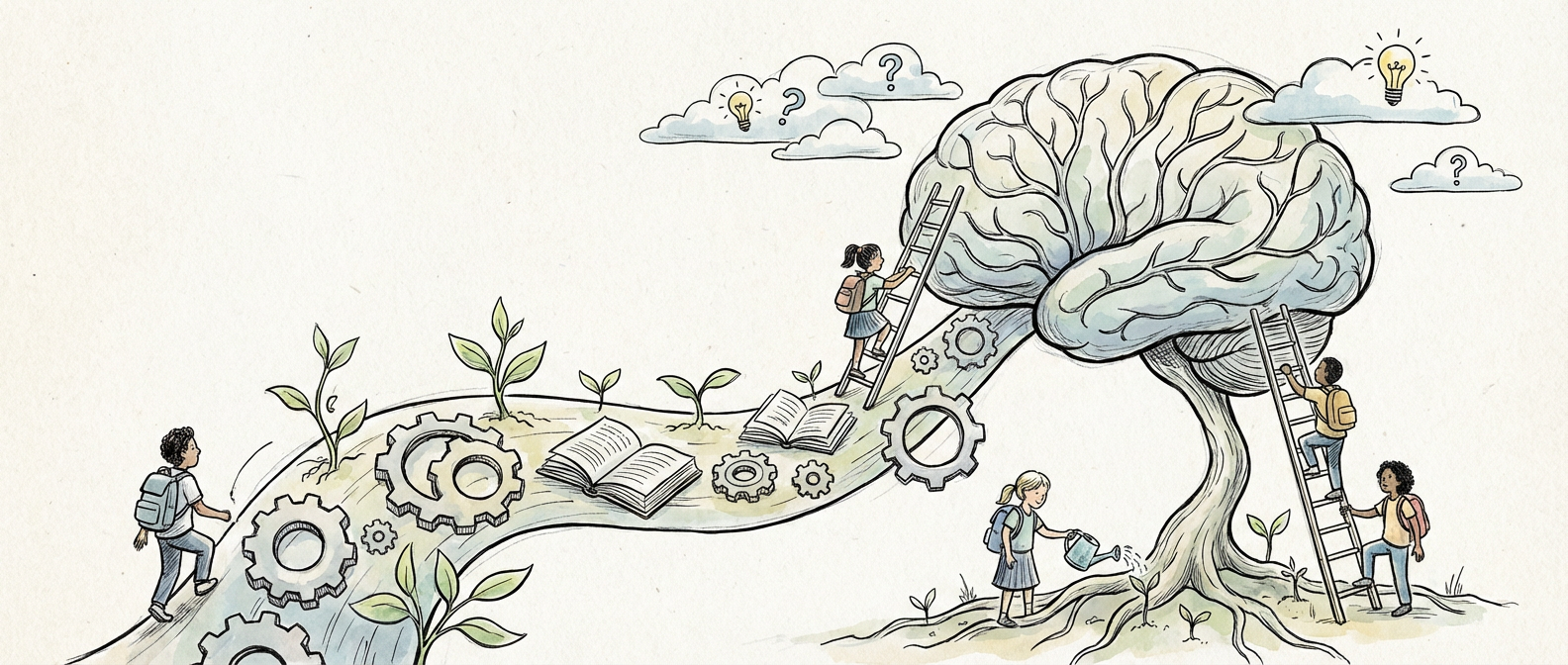
What happened over the next six months changed not only Sarah’s relationship with math but my entire approach to teaching growth mindset. Instead of launching into my usual speech about “everyone can learn math,” I asked her a simple question: “What do you think makes someone good at math?” Her answer revealed everything. “Some people’s brains are just wired for it,” she said. “Like my sister. She gets A’s without even trying.” Sarah had built an entire belief system around fixed ability, and no amount of cheerleading was going to tear it down. I needed to show her a different way of thinking, one concrete example at a time.

Building New Neural Pathways Through Deliberate Practice
The next day, I brought Sarah a simple but powerful tool: a brain imaging study showing scans of students’ minds before and after learning new math concepts. “Look at this,” I said, pointing to the bright areas of neural activity. “This is your brain literally growing new connections when you struggle with a problem and figure it out.” I could see her skepticism, but also curiosity. We spent the next few weeks documenting her own learning process, tracking not just right and wrong answers but the specific strategies she used when she got stuck.
Sarah’s breakthrough came during a lesson on solving quadratic equations. Instead of rushing to show her the formula, I gave her a pattern to notice. Three different equations with their solutions laid out in front of her. “What do you see?” I asked. She studied them for several minutes, her pencil moving as she traced relationships between numbers. Suddenly, her eyes widened. “Wait, I think I see something.” She had discovered the pattern herself. More importantly, she had experienced what her brain felt like when it was actually building understanding rather than just memorizing procedures.
From that point forward, every lesson became an exercise in thinking about thinking. When Sarah hit a difficult problem, instead of saying “I don’t get it,” she learned to say “I don’t get it yet.” We practiced identifying the specific point where her understanding broke down. She began to see these moments not as evidence of inability but as valuable information about where to focus her efforts. Her quiz scores started climbing, but more significantly, her entire demeanor in class shifted from resignation to engaged curiosity.
The Language Revolution in My Classroom
Sarah’s change taught me that developing growth mindset isn’t about motivational posters or generic encouragement. It requires a fundamental shift in how we talk about learning, intelligence, and mistakes. I started paying careful attention to the language patterns in my classroom. What I discovered was eye-opening. Students were constantly using fixed mindset language without realizing it: “I’m terrible at word problems,” “I’m not creative,” or “I’m slow at reading.”
I began interrupting these statements gently but consistently. When Marcus said “I can’t do fractions,” I replied, “You can’t do fractions yet, but let’s figure out which part is tripping you up.” When Emma declared herself “bad at writing,” we explored what specific aspects of writing felt challenging and created a plan to practice those skills systematically. This wasn’t just correcting words. It was rewiring their fundamental beliefs about their own capabilities.
The most powerful shift happened when I started teaching students to embrace what I called “productive struggle.” Instead of rushing to rescue them from difficult problems, I taught them to recognize the difference between productive struggle (where they’re actively thinking and making progress even if slowly) and unproductive spinning where they’re truly stuck and need support. Sarah became particularly skilled at this distinction, often saying things like “This is hard, but I can feel my brain working on it.”
Creating Systems That Support Growth
Individual mindset shifts are powerful, but they need supportive systems to take root and flourish. I redesigned my classroom structures to reinforce growth thinking at every turn. Instead of displaying only final grades, we created learning portfolios that showed the journey from initial confusion to mastery. Sarah’s portfolio became a powerful record of her growth. Early work samples marked with frustration and incomplete understanding, followed by gradual improvements, and finally confident solutions with clear explanations of her thinking process.
Peer collaboration became another cornerstone of our growth mindset culture. I paired students strategically, not by ability level but by complementary thinking styles. Sarah, who had developed strong pattern-recognition skills, was often paired with students who excelled at logical reasoning but missed visual connections. These partnerships showed everyone that intelligence isn’t fixed or singular. We all have different strengths that can contribute to solving problems together.
Assessment practices required the most significant overhaul. Instead of single-attempt tests that labeled students as passing or failing, I put in place a revision system where students could resubmit work after receiving specific feedback about their thinking process. Sarah’s first quadratic equations test scored 67%, but her revision (completed after identifying and addressing her conceptual gaps) earned 89%. More importantly, she understood that the learning had happened in the space between those two attempts.
Sustaining Growth Beyond the Classroom
By spring, Sarah had become an unofficial ambassador for growth mindset thinking. She started tutoring other students, not because she had become the “smartest” person in class, but because she had become skilled at recognizing and addressing learning obstacles. She could help her peers identify where their thinking got stuck and suggest specific strategies for working through difficulties. Watching her explain concepts to others, I realized she had absorbed something profound: intelligence isn’t about what you already know, but about your ability to learn and adapt when faced with new challenges.
The ripple effects extended beyond math. Sarah began applying growth mindset principles to other subjects, sports, and even social situations. She started a study group where students practiced explaining their thinking processes to each other. She became known for saying things like “That’s a really interesting mistake, let’s figure out what it can teach us.” Her change had become self-sustaining because she had developed the tools to continue growing independently.
Sarah graduated last year and occasionally sends me updates from college. She’s majoring in engineering now, a path she never would have considered when she first declared herself “not a math person.” But what makes me most proud isn’t her academic success. It’s her continued commitment to growth thinking. She recently wrote to tell me about forming a study group for other students who were struggling, and how she teaches them to view challenges as opportunities for their brains to grow stronger. That’s when I knew the real lesson had taken root.
If you’re working with students who seem convinced they “just can’t” do something, I’d love to hear about your experiences. What small shifts in language or approach have you tried? Sometimes the most powerful teaching moments emerge from our willingness to meet students exactly where they are and walk alongside them as they discover what they’re truly capable of becoming.